The hard part of a chore chart for kids isn't the chart — it's knowing what to write on it. Here's what tends to work at each age, and what tends to end in a standoff.
Our charts have blank rows on purpose, so the same chart works at four and at fourteen. Pick from the lists below and write in the three or four that fit this week.
At four, a chore is really a routine step with a grown-up nearby. Aim for three, all finishable in under five minutes.
What backfires: anything with a quality bar. "Tidy your room" is four separate jobs to a four-year-old and reads as an impossible one.
Five is when a child can follow a two-step instruction without a prompt in the middle. That's the whole difference from four.
What backfires: paying per chore this early. Five-year-olds will happily negotiate, and you'll spend more time on pricing than on chores.
Six can read the chart themselves, which is the point at which a chore chart starts saving you reminders rather than adding them.
What backfires: a chart with nine rows. Six-year-olds read nine unticked boxes as failure. Leave rows blank on purpose.
Seven can own a job end to end, including remembering it. This is a good age to hand over one chore completely and stop supervising it.
What backfires: re-doing their work in front of them. A slightly wonky bed that they made is the outcome you're after.
Teenagers don't need a chart to remember — they need one to make the split visible and stop the argument about who does more.
What backfires: stickers. A plain black & white chart on the fridge with everyone's name on it lands very differently from a star chart.
Blank rows, icon-free, US Letter and A4 — the same chart works across every list above.
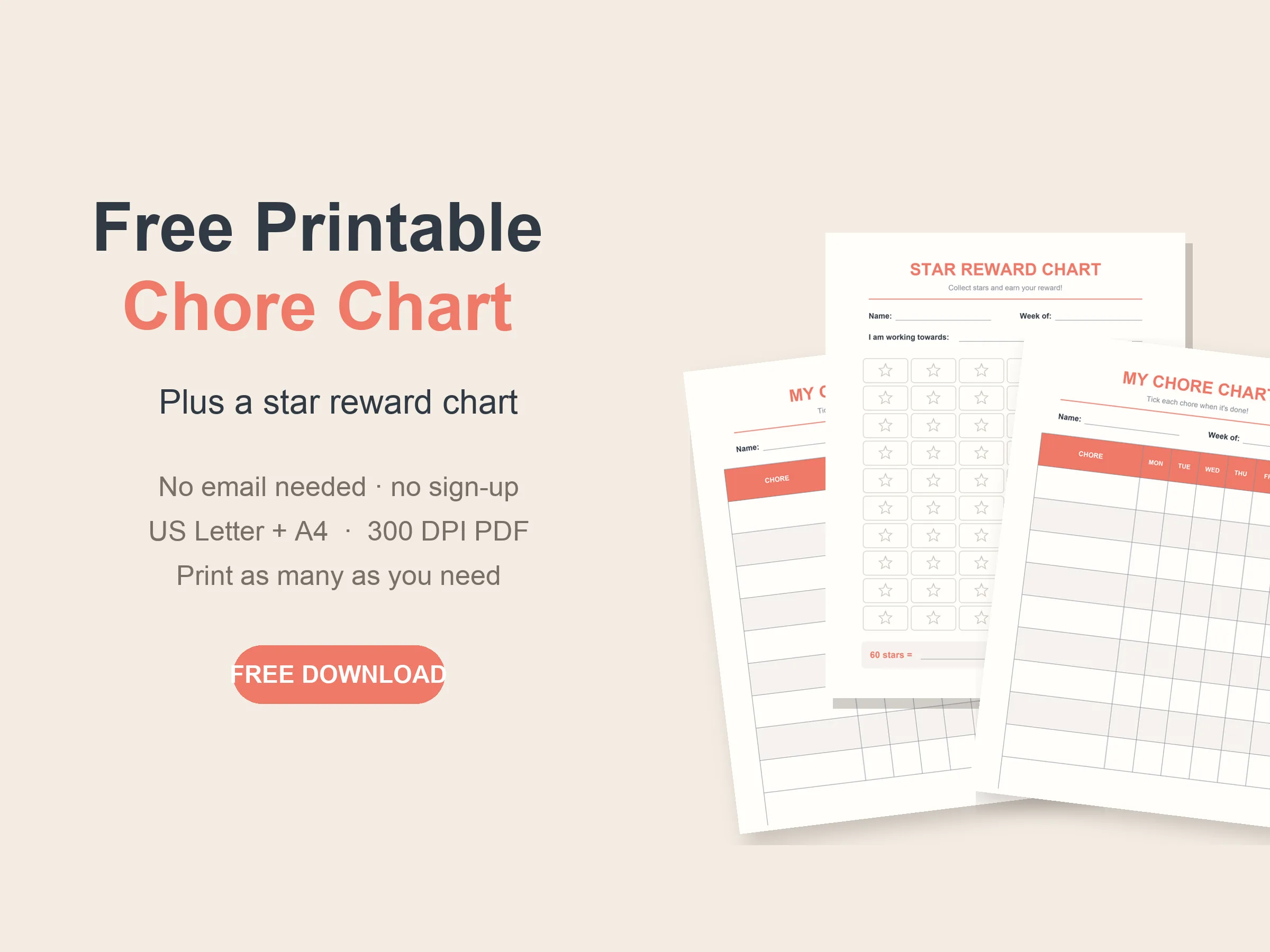
One weekly chore chart and one star reward chart. No email needed.
Free
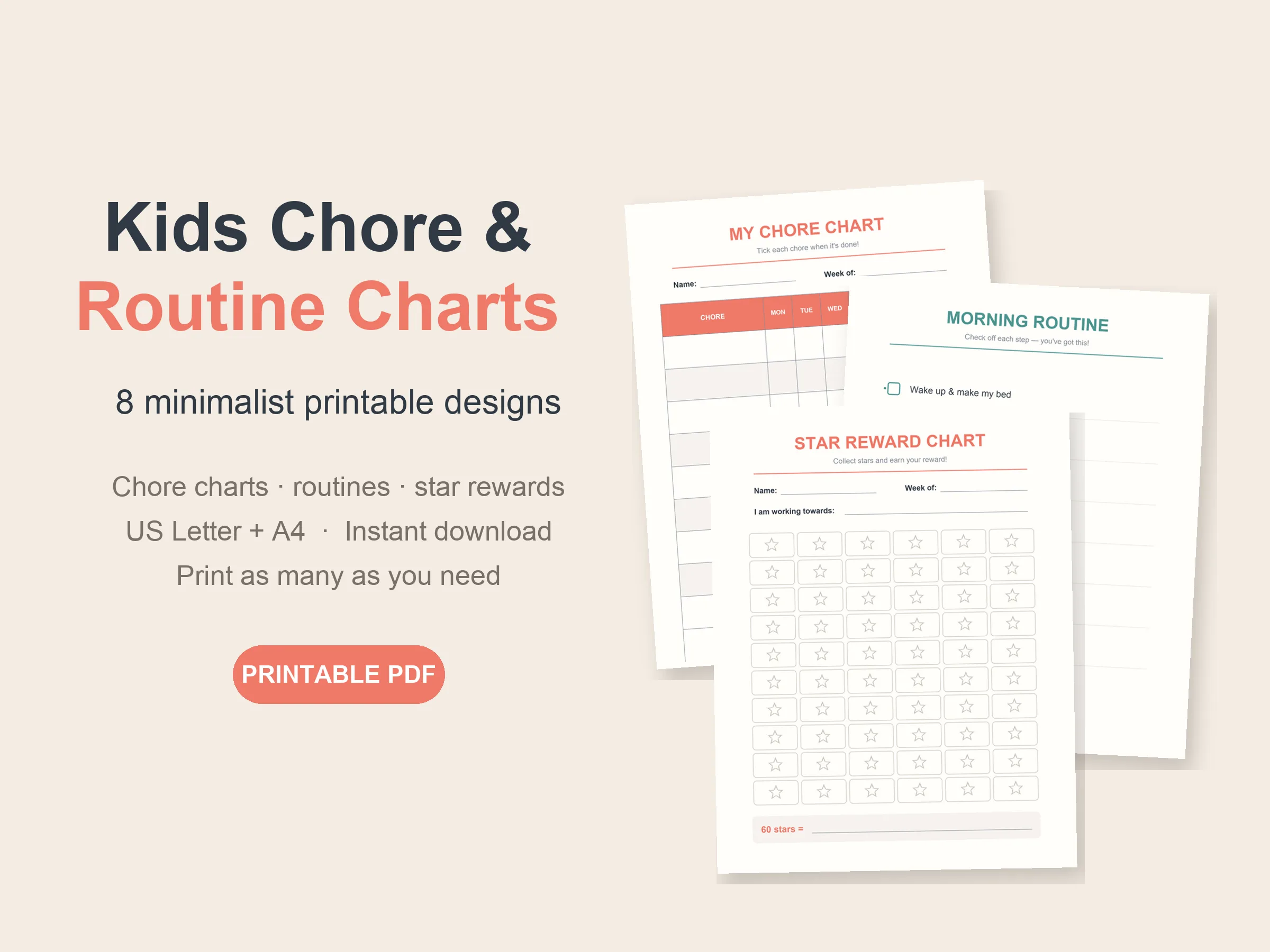
8 designs: chore charts in three colorways, morning & bedtime routine charts, star reward chart.
$4.99
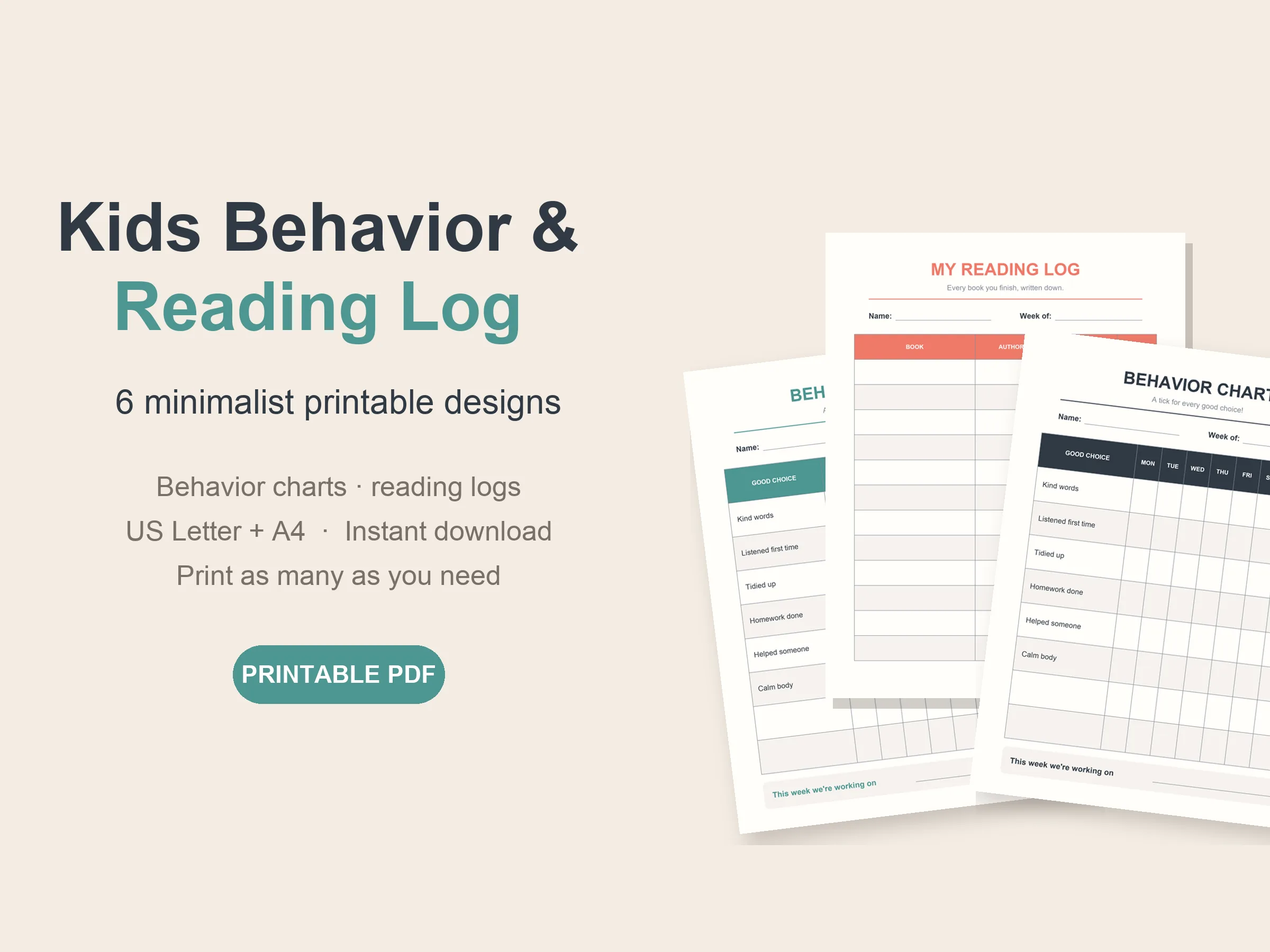
6 designs for the habits a chore chart doesn't cover.
$4.99Three or four at any age. The number of rows on the chart is not a target — an unticked row teaches a child the chart is something they lose at.
The common split is that everyday jobs — bed, plate, laundry — are simply part of living in the house, and paid work is a separate, optional list. Mixing the two tends to make the basics negotiable.
No, and deliberately. The rows are blank so one chart covers every list on this page. A chart printed with a four-year-old's chores is outgrown in a year.
Usually the chart had too many rows, or it was hung somewhere the chores don't happen. Reprint it with three rows and move it to the kitchen before giving up on the idea.