Tool Sign-Out Sheet

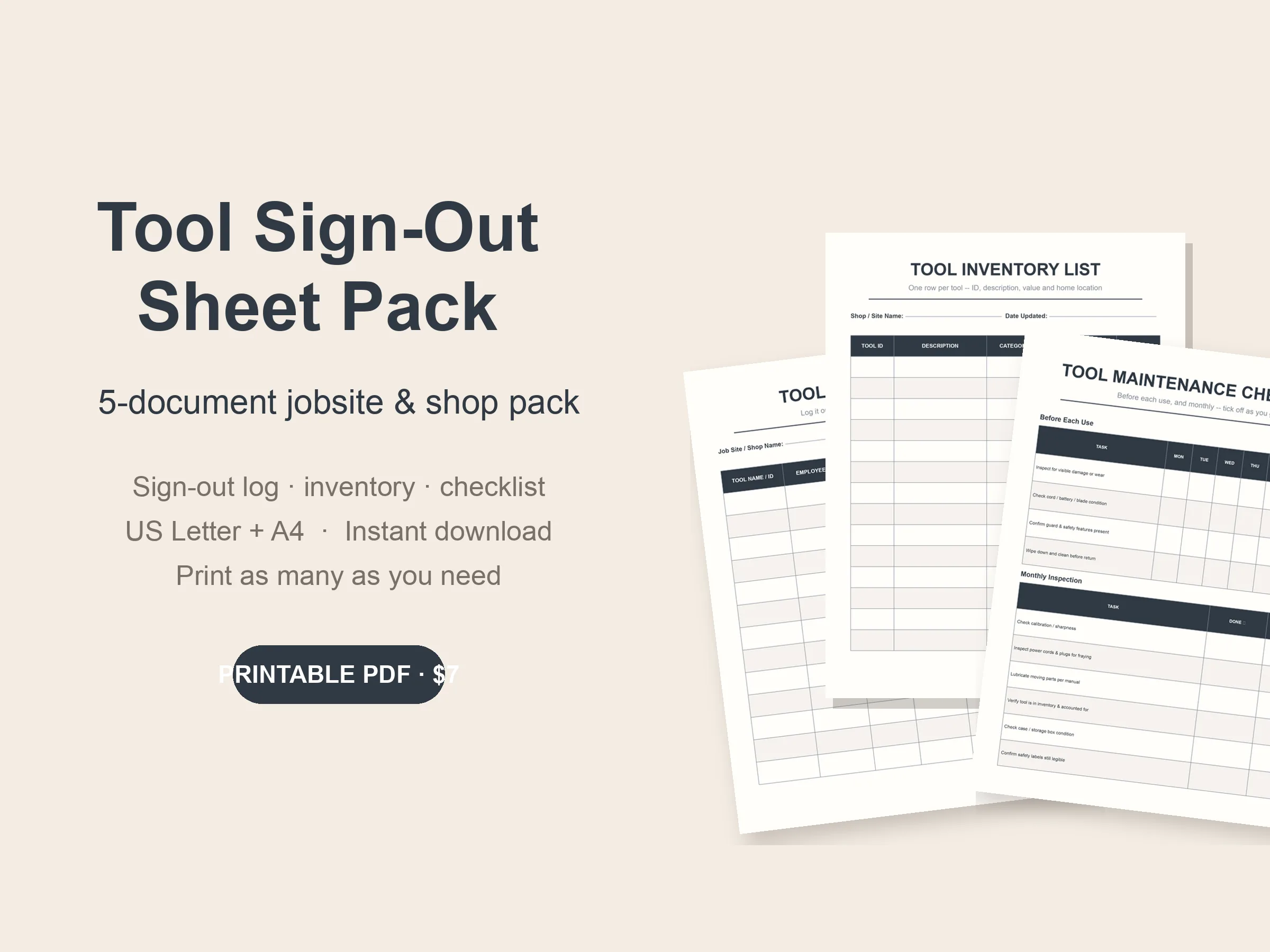
A free tool sign-out sheet built for job sites and shops: tool name/ID, employee, time out, expected return, time returned and condition, on one page. No email, no sign-up — the download links are right here.

Download US Letter (PDF) Download A4 (PDF)

PDF · US Letter + A4 · Instant download

Free for personal use · No email required · Print as many copies as you need
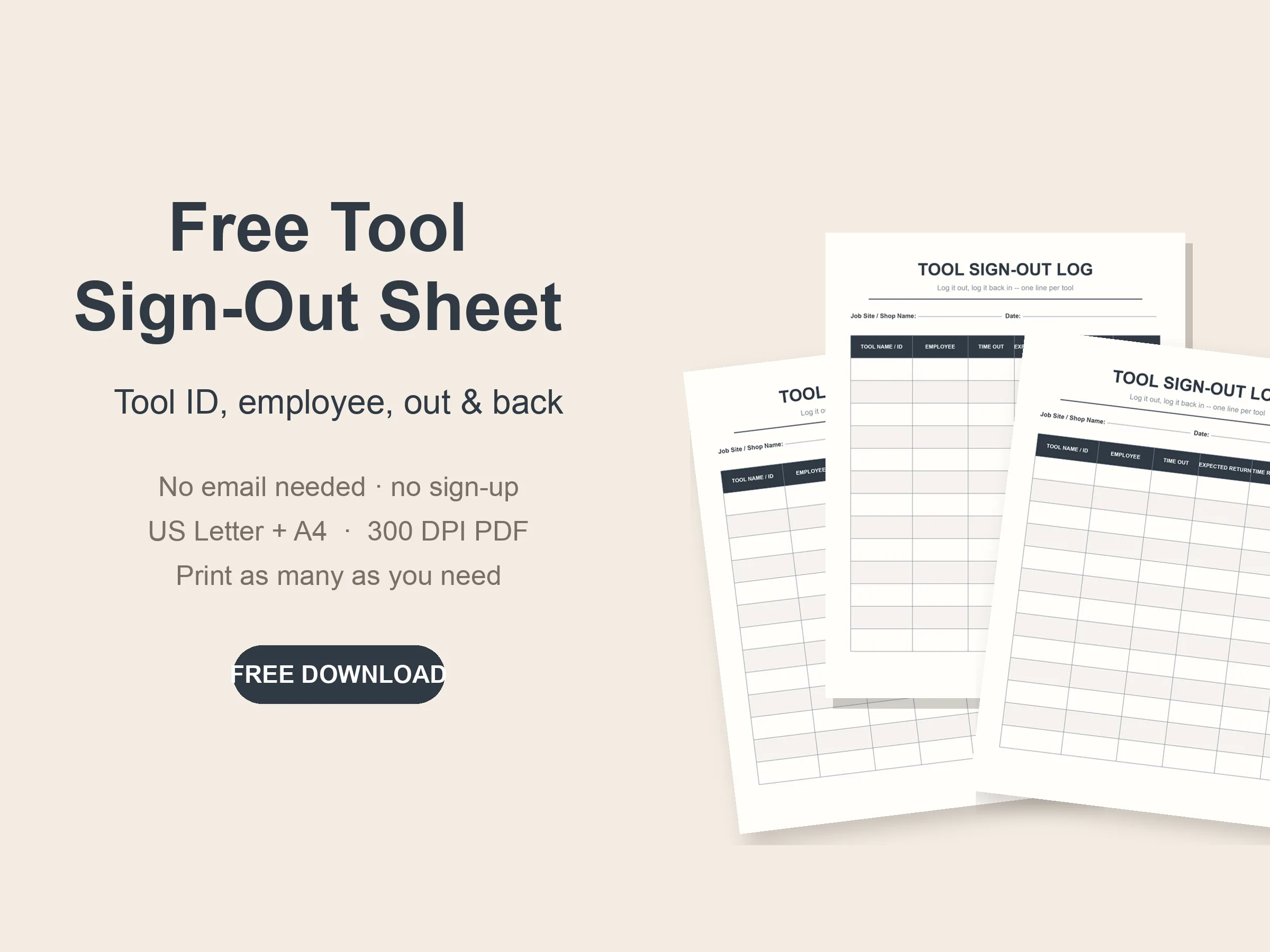
Free printable tool sign-out sheet with employee, time out and condition columns

What's on the sheet

One page, clipped by the tool crib — log a tool out, log it back in.

Tool Sign-Out Log — US Letter & A4
Job Site / Shop
Tool & Employee
Time Out / Return
Condition Notes

Every row is blank so it fits any tool, any crew, any shift.

How to keep a tool sign-out sheet that actually gets used

A sign-out sheet only works if it's faster to use than not using it. Here's what makes one stick.

1. Log it at the rack, not from memory

The sheet lives where the tools live — on a clipboard at the crib or shop door — so logging a tool out takes ten seconds, not a trip back to the office at the end of the day.

2. Write a real expected-return time

"Later" isn't a time. A written expected-return column is what makes an overdue tool obvious at a glance instead of a surprise three days later.

3. Check condition on the way back in

Note the condition when a tool is returned, not when it's needed again. That's what protects the last person who had it from getting blamed for damage someone else caused.

Tool loss is one of the quietest costs on a job site or in a shop — a missing drill or a borrowed level that never comes back rarely gets reported the day it happens, so it shows up months later as an unexplained gap in the inventory. Most crews already know roughly who took what, they just don't write it down, which means there's no record to point to once memory gets fuzzy. A one-page sign-out sheet fixes that with almost no overhead: whoever takes a tool signs their name and the time, and whoever's tracking the tool room can see at a glance what's out and for how long.

The habit matters more than the form. A sheet that sits in a drawer doesn't get filled in; one taped up where the tools actually are does. Pair the daily sign-out log with a weekly pass to flag anything still checked out, and a shop that used to lose a few hundred dollars in tools a year usually finds most of it was never lost — just unaccounted for.

Get the full tool-tracking pack

The free sign-out log is the daily habit. The $7 pack is the rest of the tool-room paperwork.

Get all 5 for $7 →

PDF · US Letter + A4 · Instant download

🔒 Secure checkout via Gumroad

Questions

Is the tool sign-out sheet really free?

Yes. One full page, no email address, no watermark and no expiry, in both US Letter and A4. It's the same design that opens the $7 pack, not a cut-down version.

What should a tool sign-out sheet include?

At minimum: the tool name or ID, the employee's name, the time it went out, an expected return time, the time it actually came back, and a place to note its condition. Those six fields are what turn a sign-out sheet into something you can actually use to chase down a missing tool.

Does this replace a barcode or asset-tracking app?

No. Barcode and RFID tool-tracking systems exist and work well for large fleets of expensive equipment, but most small crews and shops don't need the setup cost. A paper sheet at the tool crib captures the same who-has-what information for the price of a clipboard.

US Letter or A4?

US Letter for the United States and Canada. Both sizes are included as separate downloads, free and in the paid pack.

What's in the $7 pack that isn't free?

Four more sheets: a tool inventory list, a weekly checkout summary, a maintenance checklist and a damage/loss report. The free sign-out log is included unchanged.

More free trackers & templates