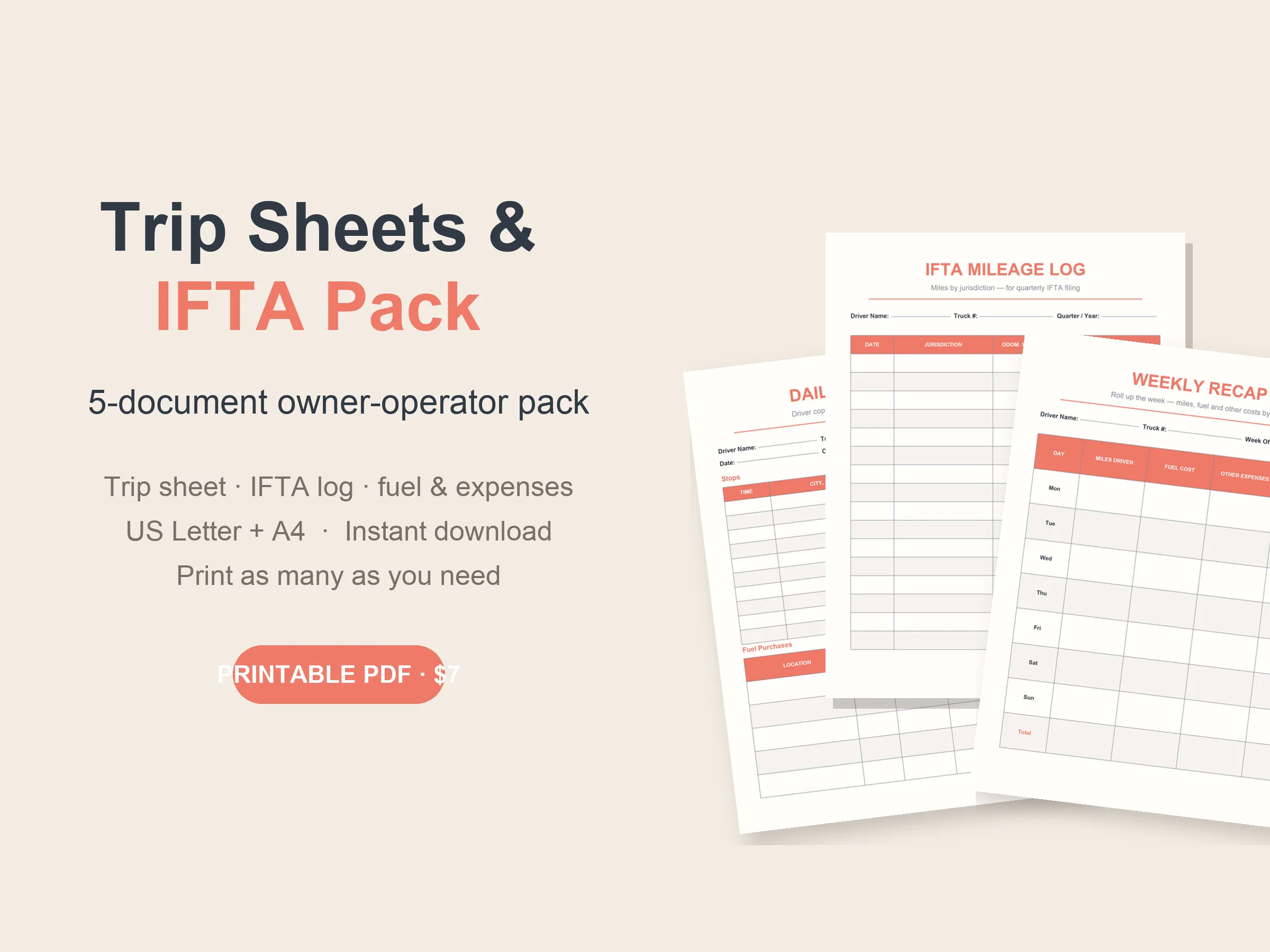
Get the trip sheet this guide describes
The free daily trip sheet has every field above, ready to print — plus a 5-document IFTA, fuel & expense pack if you want the rest of the paperwork done too.
A field-by-field walkthrough of what belongs on a trucker's daily trip sheet, why owner-operators keep one, and the mistakes that turn into audit trouble.
A trip sheet is a driver's daily paper or digital record of a truck's movement: where it went, how far, how much fuel it burned, and what happened along the way. Owner-operators and small fleets use it as the raw data source for two things: IFTA fuel tax filing and per-mile cost tracking. Dispatchers and brokers sometimes use a version of the same form to log detention time and delivery notes for billing disputes.
It is not the same as a driver's daily log (Hours of Service). A trip sheet tracks the vehicle and the trip; the HOS log tracks the driver's duty status. Many carriers keep both, but they serve different regulators and different audiences.
IFTA requires carriers based in a member jurisdiction to file a quarterly return showing miles driven and fuel bought in every state or province they operated in. The trip sheet is the source document for that return. Without daily records, you're reconstructing months of driving from memory at filing time — or guessing, which is how audits go badly.
The same data — miles, fuel cost, detention time — is what tells an owner-operator whether a lane is actually profitable. Fuel cost per mile, deadhead percentage, and detention frequency all come out of trip sheet data rolled up over time.
A trip sheet only pays off if it's filled in the same day, every day. Treat it as part of the job, not paperwork to catch up on before the IFTA deadline.
The free daily trip sheet has every field above, ready to print — plus a 5-document IFTA, fuel & expense pack if you want the rest of the paperwork done too.
Free tool sign-out log for job sites & shops, plus a 5-document tool-tracking pack.
Free + $7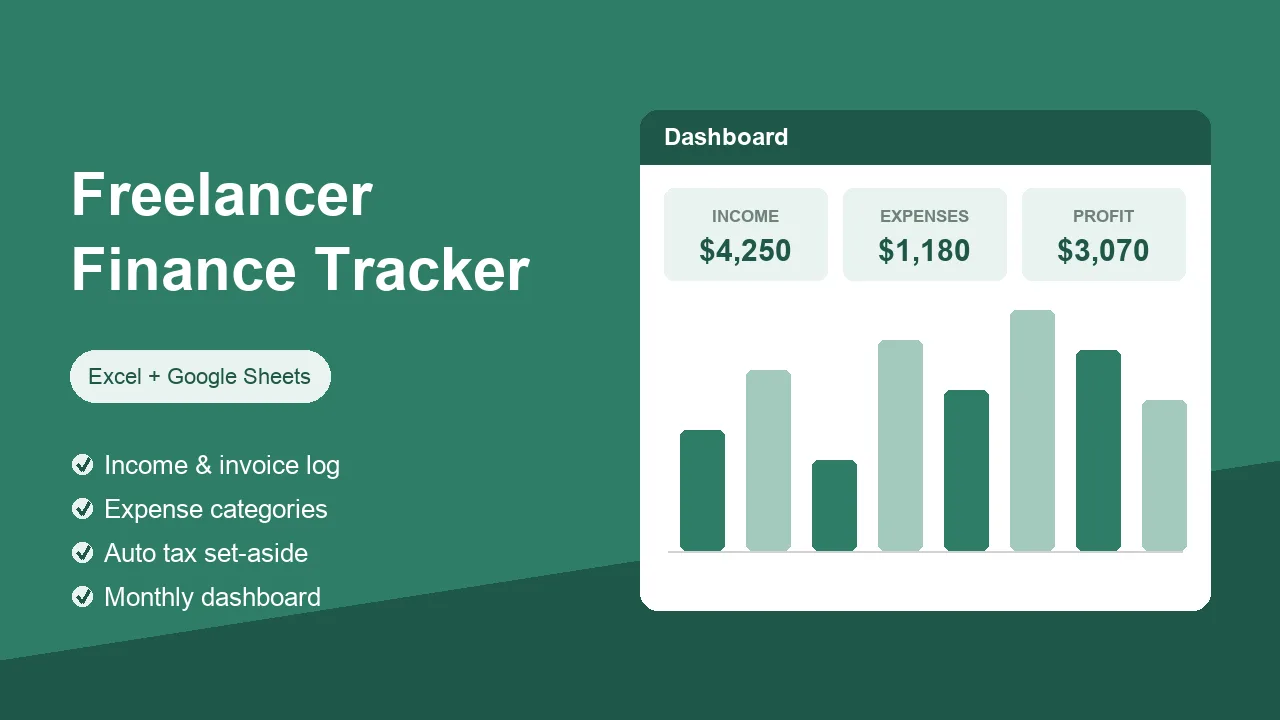
Income and expense tracker for Google Sheets and Excel — unpaid invoices and automatic tax set-aside, with a live dashboard.
$9
Free daily pool log for chlorine, pH & flow, plus a 5-document full-season pack.
Free + $7